Trading Foundation
Options Trading Basics: Terminology Every Beginner Must Master
Every options term explained simply: premiums, strikes, in and out of the money, open interest, spreads, and the order terms your broker uses.
Read more →


Swing trading means holding a position for a few days to a few weeks to capture a larger price move. This guide covers how it works, how it compares to day trading, why it suits beginners, and how to start.


Swing trading is a style of trading where you hold a position for a few days to a few weeks to capture a larger move in price, called a swing. You do not watch every tick. You find a setup, place the trade, set your risk, and let it play out over days. Because it does not need all-day screen time, swing trading is often the most realistic style for people with a job, and one of the best places for beginners to start. If trading itself is still new, start with what is trading.
Swing trading means holding a trade for a few days to a few weeks to catch a bigger price move, using daily or 4-hour charts. It needs far less screen time than day trading, usually 30 to 60 minutes a day, which is why it suits beginners and people with jobs. You can start with a few thousand dollars, risk 1 to 2 percent per trade, and use simple tools like moving averages and support and resistance. The main trade-off is that you hold positions overnight and over weekends, so you carry the risk of gaps and news you cannot control.
Swing trading sits between day trading and long-term investing. A day trader closes every position the same day. An investor holds for years. A swing trader holds for a few days to a few weeks, aiming to capture one clear move in price and then get out.
The idea is simple: markets do not move in a straight line. They push up, pull back, and push again, creating "swings." A swing trader tries to enter near the start of one of those moves and exit near the end. You can go long, buying when you expect the price to rise, or short, selling when you expect it to fall. You can see how swing trading fits among the other styles in types of trading.
Swing traders mostly work off the daily and 4-hour charts, and they usually take only one to five trades a week. You are not reacting to every move. You scan for a setup, decide your entry, your stop loss, and your target before you enter, then let the trade develop over the next several days.
Here is a simple example. You buy a stock at $50 because you expect it to run toward $60 over the next two weeks. You set a stop loss at $47, so your risk is $3 per share. If the stock reaches $60, you make $10 per share, a reward three times larger than your risk. If it drops to $47, you take the small planned loss and move on. The key is that once the trade is on, you leave it alone and let your plan play out.
Both are active styles, but they suit very different lives. Day trading closes everything the same day and needs constant screen time. Swing trading holds for days to weeks and needs only a daily check-in. Day trading avoids overnight risk but demands your full attention; swing trading frees your time but exposes you to overnight and weekend gaps. If the faster style appeals to you, compare it with day trading for beginners.
Swing trading is often the gentlest way to start, for a few clear reasons. It needs far less screen time, usually 30 to 60 minutes a day, so you can trade around a job. It gives you time to think before acting, instead of making split-second decisions under pressure. And its slower pace makes it easier to learn from each trade, because you can study your setups calmly rather than reacting to every tick. That breathing room is exactly what most beginners need while they build skill.
You can start small. Many swing traders begin with around $2,000 to $5,000, though you can start with less. What matters far more than your account size is how much you risk per trade. A common rule is to risk no more than 1 to 2 percent of your account on any single trade. On a $3,000 account, that is $30 to $60 per trade, so no single loss can seriously hurt you.
Risk management is what keeps you in the game. Risk a small, fixed amount per trade, usually 1 to 2 percent of your account, and always set a stop loss before you enter. Because swing trades are held overnight and over weekends, you also carry gap risk: a stock can open sharply higher or lower on news while the market is closed. You manage that by sizing your positions sensibly and never risking money you cannot afford to lose.
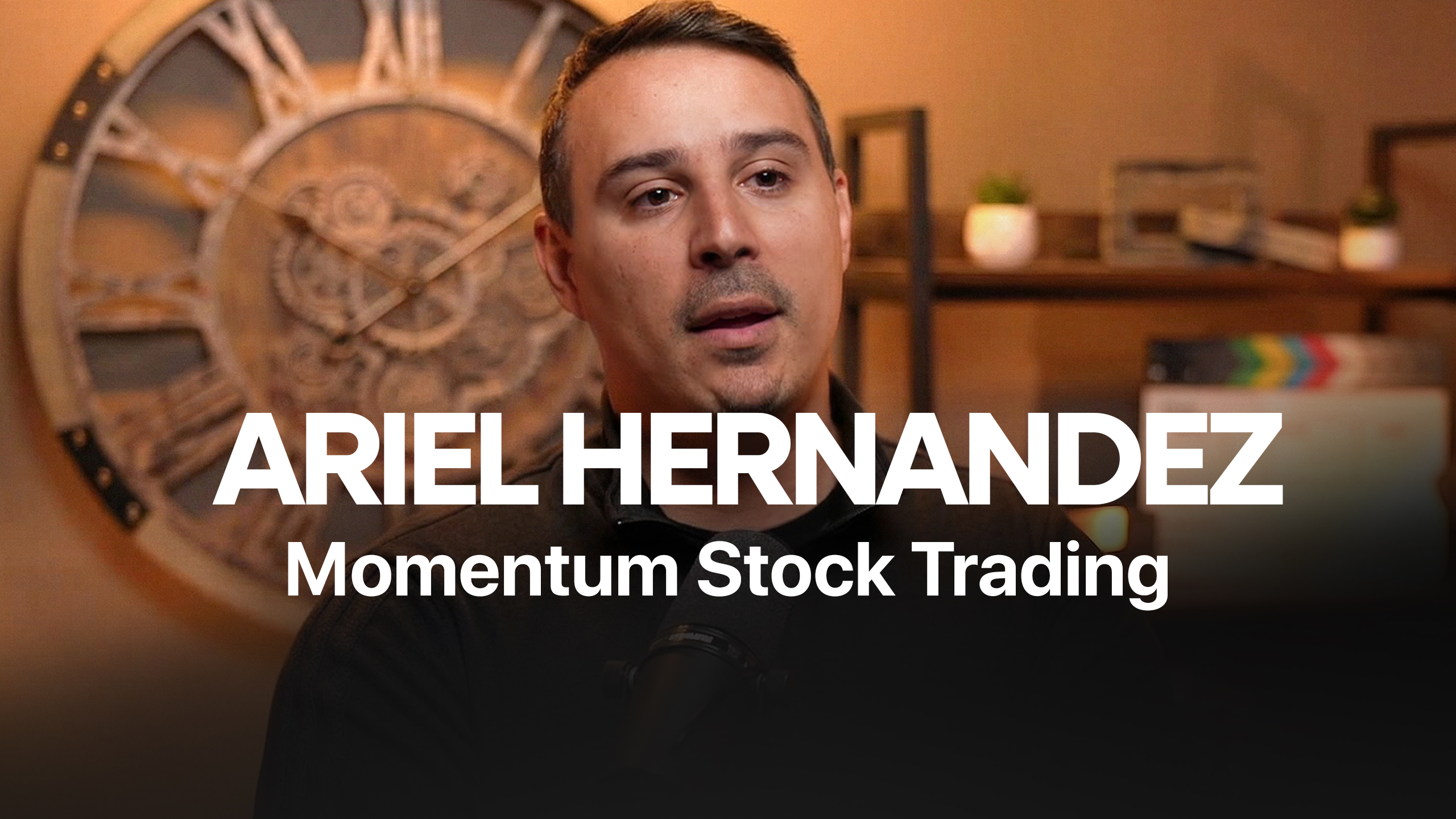
This is just the basics of swing trading. If you want to learn it in more depth, and actually see how the setups work, you can sign up for free at Chart Academy, a free trading education platform with masterclasses from professional traders around the world, covering stocks, options, futures, forex, and trading psychology. Ariel Hernandez has recorded a swing trading masterclass there that walks through finding a setup and managing the trade start to finish, and it is completely free.
Swing trading is buying and holding a stock or other asset for a few days to a few weeks to profit from a larger price move, then selling. It sits between day trading, which closes everything the same day, and long-term investing, which holds for years.
Yes. Swing trading is often the best style for beginners because it needs only 30 to 60 minutes a day, gives you time to think before acting, and its slower pace makes it easier to learn from your trades than the split-second decisions of day trading.
You can start with a few thousand dollars, and many beginners start with $2,000 to $5,000, though you can begin with less. What matters more is risking only 1 to 2 percent of your account per trade and only using money you can afford to lose.
Day trading closes every position within the same day and needs constant screen time. Swing trading holds positions for days to weeks and needs only a daily check-in. Day trading avoids overnight risk but takes more time, while swing trading frees your time but carries overnight and weekend gap risk.
There is no fixed amount, and most beginners lose money at first. Returns depend on your skill, your risk management, and market conditions, not on a set percentage. The realistic goal early on is to learn to trade consistently and protect your capital, not to hit a target.
Yes. All trading carries risk, and swing trading adds overnight and weekend gap risk because you hold positions while the market is closed. You manage this with proper position sizing, a stop loss on every trade, and only risking money you can afford to lose.
You can learn more at Chart Academy, a free trading education platform with masterclasses from professional traders around the world. It has a swing trading masterclass from Ariel Hernandez that walks through real setups and how to manage trades, and it is free to watch.
Chart Academy is the world's first free, all-in-one trading education platform. Get Trading Masterclass taught by world-class traders, plus guides on every market. No subscriptions, no credit card.

.svg)