.svg)
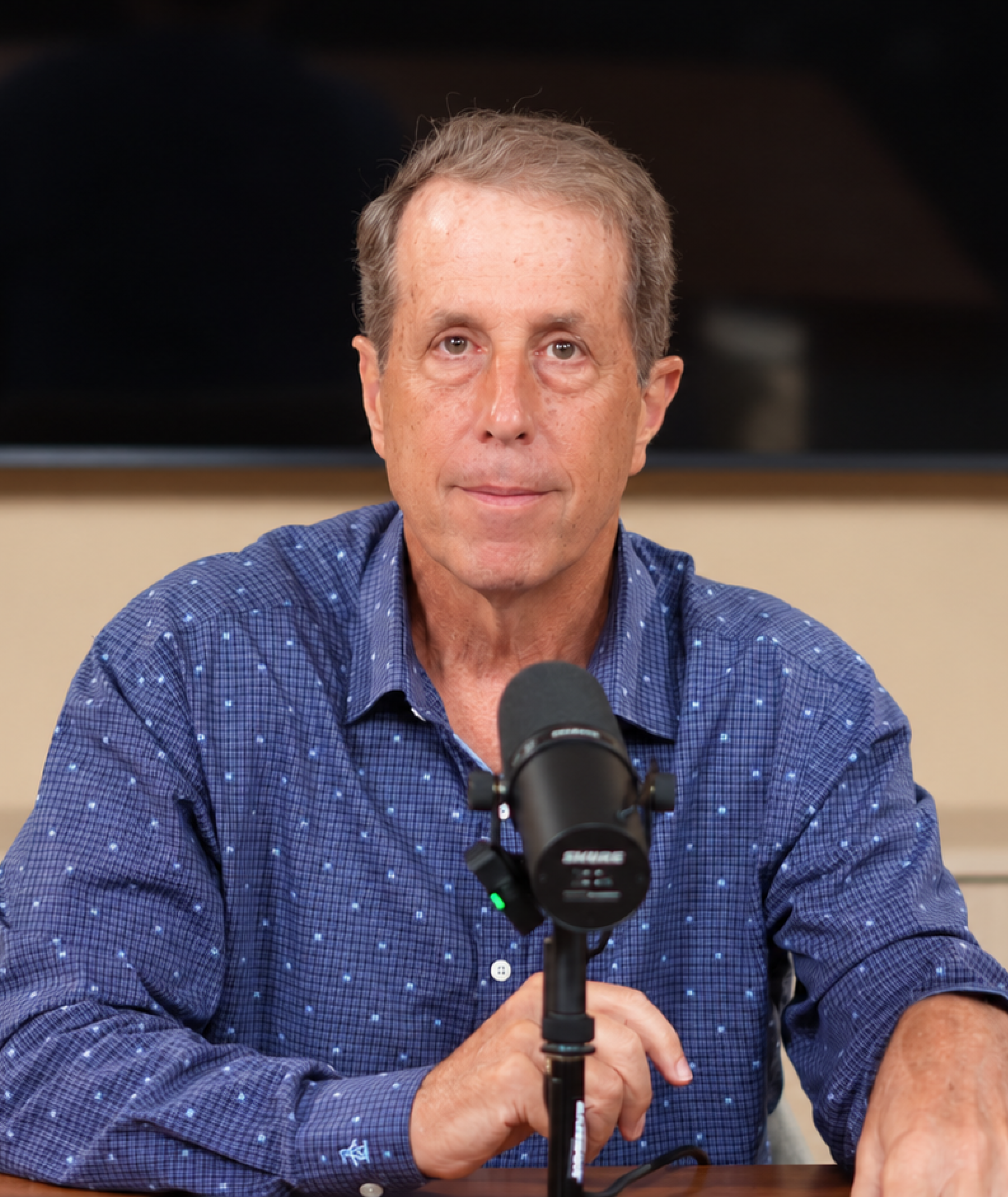
Andy Krieger

Andy Krieger is one of the most aggressive forex traders the world has ever seen. He is known for his famous trade against the New Zealand dollar, which set the playbook George Soros later used against the British pound. He has traded currencies and options since the 1980s.
About Andy Krieger
Andy Krieger is one of the most aggressive forex traders the world has ever seen. He is best known for his trade against the New Zealand dollar, a $300 million trade that crashed the currency. That trade set the playbook George Soros would later use to crash the British pound. Andy did it first.
What makes Andy different is how he thinks about markets. For the first five years of his career, he never looked at a chart. He kept a motto on his desk: "Every sunken ship had a chart room." He focuses on options, probabilities, information flow, and finding the places where the market is mispriced.
From Indian Philosophy to Trading
Andy never planned to be a trader. His dream was to be a professor of Indian philosophy. He finished the coursework for his PhD and studied Sanskrit, Bengali, Arabic, and other languages, with his graduate work funded by the Defense Department's program for neglected languages.
Then his professor sat him down. He told Andy he was very good, but he wouldn't get a job until one of the professors died. So Andy went to the Wharton School for an MBA, while still studying his languages to keep his scholarship. With no work experience, he presented his languages as perfect training for foreign exchange.
At Wharton he took an options course, and his professor suggested he write a currency option pricing model. Andy had never done any programming, but he built it as his final project. That set him up for his first trading job at Salomon.
What he loved about options is that they are three-dimensional, not two-dimensional. You can make bets on direction, on changes in volatility, and on time, all layered together. As he puts it, he would never get bored, because he would always find new ways to express an idea.
Learning the Markets at Salomon
At Salomon, the desk was just Andy and the famous trader Bill Lipschutz. His boss welcomed him aboard, then told him that if he lost any money, they would pull him right out. And because Andy already knew options so well, he wasn't allowed to trade them for his first three months. He could only trade spot and futures, so he would learn how markets move and what drives them.
When Bill moved to London to bring in customers, Andy had to cover the desk. He was in the office at 4 in the morning and stayed until Tokyo lunch at 11 at night, watching the screens up to 19 hours a day. It was hard, but he learned a lot, including how to find liquidity.
Their book was massive for the time, and they weren't a bank, so the banks tried to keep them out. Andy found that 8 or 10 banks would execute his orders properly. A few others, which he called "the pigs," would front-run his orders and push the market against him. So he played them against each other. He might give $800 million of real orders to the good banks and $500 million to the bad ones, knowing the bad banks would push the market right into his real orders. Everything, he says, was like a puzzle.
The Famous Kiwi Trade
Andy was having a very good year, with a big cushion of profits from trading many currencies. He had never traded the New Zealand dollar, but he had strong relationships with New Zealand banks, because he needed liquidity late in the New York day. At the time, his portfolio had around 29 different trades on at once, across directional, volatility, cross, and trend-following strategies.
When he called the New Zealand banks, they started sharing other traders' positions with him, and even got them wrong. They told him Bill Lipschutz was long the kiwi, when Bill was actually short. Andy took it personally. If they were talking about other clients, what were they saying about him?
The kiwi had rallied about 14 cents, almost 30 percent, with no correction. Every bank told him it was a one-way bet. Andy saw something else. Trend followers, the New Zealand Dairy Board, and many others were all long, and the market makers were trying to squeeze it higher. He also knew from his own trend-following systems where their stops would be, below around 64 cents.
So he started selling, 50 million kiwi at a time, until he was short 250 million. Then he made the move that made the trade famous. He bought a massive call option position, around 5 billion New Zealand dollars' worth. The market heard about a crazy trader in New York buying calls and assumed he was wildly bullish. In reality, he was setting up a synthetic put. That meant he was getting ready to sell around 5 billion kiwi and drive the price through every stop.
He stopped trading through New Zealand so no one could see what he was doing, and used small banks in Singapore and Hong Kong to slowly sell in. As the price broke down, he bought out-of-the-money puts. Near 64 cents, he slammed it. The kiwi fell 10 percent in about 25 minutes.
Andy is honest about the trade. He says it was the right trade, but he got into it for the wrong reasons, and he wouldn't do it the same way again. What made it work was a combination of options and market psychology. He also knew his loss was limited, and his profits for the year meant he could handle it.
How Andy Trades
Trading, for Andy, is always about finding inefficiencies: mispricings and structural imbalances. One example is Japanese companies that have to hedge before quarter end. His strategies today are variations of what he has done since the 1980s.
His team runs its books for a steady income stream, aiming to make money at least 10 to 11 months of the year. Then they take some of those profits and put them into bigger directional ideas. He explains why you can't only trade big ideas: markets trend maybe 35 percent of the time or less, and it's hard to know when a real trend is starting.
When he managed money for clients, the target return was 18 percent a year, because that was what they found they could do consistently. Some years they made 12 or 13 percent, and some years they made a couple of hundred percent, when they caught a big move.
He looks for trades that are structurally wrong. For example, in the S&P, a 5-delta put might be 25 percent out of the money while a 5-delta call is only 10 to 12 percent out of the money. That doesn't make sense mathematically, and it creates an opportunity to get paid well for a bet he expects to win 199 out of 200 years.
Today, his team focuses heavily on S&P options, because they are very liquid and, in his words, incredibly mispriced. He has also traded gold aggressively, and he will look at any market that is interesting.
Think in Probabilities, Not the Next Five Minutes
Andy believes most traders are fighting in the wrong place. Retail traders are at a disadvantage in information flow, order flow, and speed. He asks why he would be better equipped than a short-term trader at Citadel to figure out the next 50 points in the S&P. He wouldn't be.
His edge is probabilities. Over the next 30 minutes, he has little chance. Over the next five days, he has a better chance. Over six to eight weeks, he believes he can compete with anyone in the world. That's why he says traders should broaden their time horizon by "probably about 2,000 percent."
He gives a simple example. When volatility in USD/JPY drops to around 5 percent, he can buy options and rebalance on a market-neutral basis. Over time, volatility tends to return to 7, 8, or 9 percent, so the trade can make good money without needing a view on direction. He says he could teach anyone to do it in three days.
Markets Have Memory
Even without charts, Andy pays close attention to major price levels. Markets remember multi-month and multi-year highs and lows, and all-time highs and lows matter most. He calls these energy points. To him, the market is simply people expressing their views, which is a shifting of energy one way or the other.
He gives examples like 4,800 in the S&P and the 160 to 161 area in USD/JPY. When price returns to a level like that, he wants to be involved, even if he doesn't know yet how.
He also watches how markets react to news, not the news itself. If objectively bearish news comes out and the market goes up, that is information.
Know Yourself, Detach Your Ego
Over the years, Andy has hired around 40 traders with very different backgrounds. Some were good up to a certain amount of money, then blew up when pushed past it. One trader, in a panic, would literally sit under his desk.
What matters most, he says, is being objective and knowing your own inner mechanisms. You need to tell the difference between an idea, an intuition, and an analysis. You need to adapt when the market changes. You need a high tolerance for pain. And above all, you need to keep your ego out of the trade. As he puts it, if you think you're special because you're making money, or deficient because you're losing money, you have no chance.
He learned this early. He was once managing his partner's book, which had a huge naked short position in USD/JPY options, and he hadn't slept much for four days. He left a phone line open under his pillow with a bank in Singapore. Then he woke to screaming: major news had hit, and USD/JPY was suddenly much lower. Instead of panicking, he did breathing exercises, calmed his mind, and made calm decisions. If he had panicked, he says, it could easily have cost a couple of hundred million dollars in two hours.
His advice is to spend at least 10 to 15 minutes a day being calm and quiet, with no internet. He says many top traders do it, they just don't talk about it.
Lessons From the Best Traders
Andy once spent four days with Paul Tudor Jones, Louis Bacon, Bruce Kovner, Stan Druckenmiller, and Ray Dalio at Paul's place in Maryland. Over dinner, Paul asked everyone for their view on the dollar-mark. Everyone had the same view, and everyone started squirming. Finally Paul said it was almost time for Tokyo to open and told them to go do their trades. They all wanted out, because everyone already had the same position.
The lesson stayed with him. If it's early in a move and everyone has the same bet, it's too obvious. That's why he advises traders to speak to lots of other traders every day, not to argue, but to understand what they think and why.
He also saw that the best traders were laser focused, with distractions kept away so they could make calm decisions. And the best prop traders didn't stick to one market. They looked at many markets, many strategies, and many time horizons.
Andy's Advice to Traders
- Be careful with options. A chief dealer from Swiss Bank who joined Andy's team once told him, "We're dealing with guns and bullets. You're dealing with nuclear bombs." If you don't know what you're doing, Andy says, stay away from options. If you do, they are much more efficient than trading the underlying.
- Try trading without charts. Watch the price changes and see if you can feel the energy building up before the market moves. It trains a different muscle.
- Keep adapting. If something isn't working, something has changed. Check volatility, trend behavior, and average ranges, and adjust.
- Match your strategy to yourself. Know your duration and stick to it. If you don't stick to your strategy, you have no chance.
- Know why you trade. The best reasons are loving a challenge and being willing to look hard at yourself. Traders who can't stay calm get pulled into self-doubt.
When asked why he still trades after all these years, Andy gives three reasons. Markets fascinate him, because they are made of people's fears and hopes. He loves learning about himself and the markets. And he knows that if he stops, he'll get old and sloppy. As he puts it, you don't have to be in this game, but you need a game.
Learn From Andy Krieger on Chart Academy
Andy's free masterclass, The Art of a Big Trade, is coming soon on Chart Academy.

Frequently Asked Questions
Who is Andy Krieger?
Andy Krieger is one of the most aggressive forex traders the world has ever seen. He is best known for his famous trade against the New Zealand dollar, which set the playbook George Soros later used to crash the British pound. He studied Indian philosophy before earning his MBA at Wharton and starting his trading career at Salomon.
What was Andy Krieger's New Zealand dollar trade?
After the kiwi rallied almost 30 percent, Andy saw that the market was heavily long. He shorted 250 million kiwi, then bought a huge call option position, around 5 billion New Zealand dollars' worth, which he used as a synthetic put. When the price reached around 64 cents, he sold aggressively, and the kiwi fell 10 percent in about 25 minutes.
Did Andy Krieger use charts?
For the first five years of his career, Andy never looked at a chart. He kept a motto on his desk: "Every sunken ship had a chart room." He still pays close attention to major price levels, such as multi-year and all-time highs and lows.
What markets does Andy Krieger trade?
Andy built his career in currencies and currency options. Today his team focuses heavily on S&P options, and he also trades gold and any other market where he sees an opportunity.
Should traders trade options?
According to Andy, only if they know what they're doing. He compares options to nuclear bombs compared with guns and bullets. Traders who don't understand them can get badly hurt, but traders who do can find them much more efficient than trading the underlying.
What time horizon does Andy Krieger recommend?
Andy believes retail traders have little edge in short-term noise. He says that over six to eight weeks he can compete with anyone in the world, because that is where probabilities matter more than speed and information.
What can I learn from Andy Krieger on Chart Academy?
Andy's free masterclass, The Art of a Big Trade, is coming soon on Chart Academy.
What is Chart Academy?
Chart Academy is a free, all-in-one trading education platform designed to help traders learn real, practical skills from world-class traders. It offers in-depth masterclasses taught by real traders across stocks, options, futures, forex, crypto, and trading psychology. In addition to educational content, Chart Academy includes personalized learning paths, downloadable resources, and access to exclusive tools and rewards, all in one place. There are no subscriptions, no paywalls, and no credit card required. The goal is to make high-quality trading education accessible, practical, and easy to follow for traders of all levels.
Ready to learn Trading for Free?
Chart Academy is the world's first free, all-in-one trading education platform. Get Trading Masterclass taught by world-class traders, plus guides on every market. No subscriptions, no credit card.

.svg)

More Instructors