.svg)
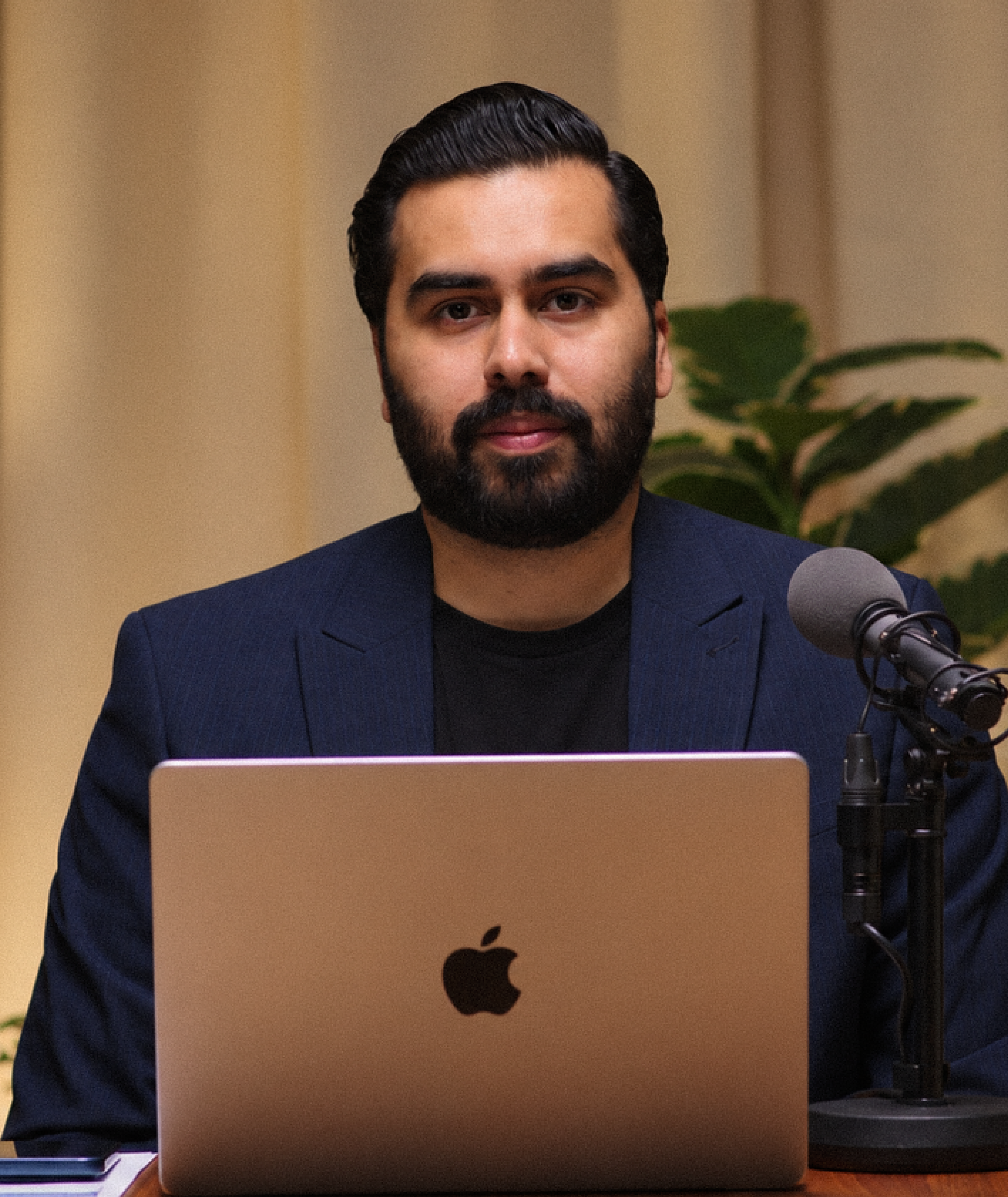
Isar Chaudry

Isar Chaudry is a trader and hedge fund strategist who manages eight figures in AUM and is publicly building a hedge fund strategy consultancy. He teaches traders how to move from the retail space to the institutional space by building an audited track record.


About Isar Chaudry
Isar Chaudry is a trader and hedge fund strategist who manages eight figures in AUM and is publicly building a hedge fund strategy consultancy. His path into trading was unusual. He came from architecture, not finance, and he built his career by learning how the institutional world actually operates, then applying it to his own capital. He trades mainly FX and deploys capital into stocks and bonds when a strong opportunity appears.
His core message is that traders need to step out of the retail bubble and start thinking institutionally. Anyone can post screenshots of profits on social media. What builds real trust with investors is a verifiable, audited track record. As he puts it, becoming a verified trader is one of the biggest assets you can have in this generation.
From Architecture to Trading
Isar was born in Belgium and moved to the UK in 2010, where he completed a degree in architecture. In his final year he was also working part-time at an architecture firm, and he realized that the career he had always wanted wasn't for him. At 20, with no major responsibilities, he decided to take a risk. If it didn't work out, he could always go back to architecture.
He first looked at real estate, but he didn't have the capital, so he searched for something that could produce cash flow and found trading. He tried following signals and lost money, but he saw the potential. He started studying everything he could find, from YouTube to books. His first live account was just $500. For a long time he was stuck at breakeven. He never blew an account, but only because he was too afraid to put on real risk, and he wasn't making money either.
The turning point came when he learned to detach himself from money. His first real conviction trade was in Apple. He invested ahead of an iPhone release and held through to Christmas, based on how the stock had tended to perform around launches and the holiday season.
Learning How the Institutional World Works
When Isar decided to go full time, his father introduced him to a friend who worked on a major corporate trading floor. That friend became a mentor and close friend. He introduced Isar to the systems, processes, and infrastructure of the investment world, and to certifications such as the CFA. Isar went through an internal program at the bank where his friend worked, and he also completed an investment banking program at the University of Geneva.
His mentor also reset Isar's expectations. The trading community at the time was full of signals, huge claimed returns, and Lambos. His friend pointed out that hedge funds, banking floors, and investment firms target small monthly percentages, and that those small numbers were the right target. That was when it clicked for Isar that his own targets had been far too high.
Building Capital and Getting Audited
After about two years of trading, including consistent results on a demo account, Isar earned his father's trust to start with around $50,000 of real capital. [CONFIRM: OK to include the loan from his father]
During COVID in 2020, he spotted an opportunity in an ultra-short dollar bond ETF after it sold off. Because government-issued bonds have strong backing, he was confident it would recover. Over about seven months the position returned around 10 percent, roughly 1.4 percent a month. Many retail traders would see that as small, but in the institutional world it is a healthy number, and it impressed his mentor.
From there, Isar grew his $50,000 to around $100,000, then to $150,000. Another round of bond trades turned around $150,000 into roughly $500,000. That was his first real money, and the moment he knew he could do this.
When his mentor proposed working together with investors, he asked Isar for a verified track record. He introduced Isar to KPMG, the global accounting firm, to have his portfolio independently audited. Once the audit cleared, they sat down with investors and brought on their first investors. By 2024, Isar was managing around $6 million in personal capital and preparing to transition into a hedge fund.
Running a Trading Operation Like an Institution
After seeing how corporate trading floors are structured, Isar built the same model on a smaller scale. Large institutions split work into departments of specialists, so each person can focus on one responsibility. Isar hired his own team with strategy, research, risk management, and execution roles.
Every trade idea moves through the team as a case study:
- Strategy: identifies potential trade scenarios.
- Research: checks what news could affect the instrument, such as an upcoming CPI release, and how the market reacted the last few times.
- Risk management: decides how much risk to deploy, when to add or reduce risk, and whether to hedge.
- Execution: places the trade.
Isar oversees the whole process. Only if the case study holds up does the trade go ahead.
He also points to a simple reason hedge funds run multiple traders. If 6 out of 10 traders have a winning month and 4 have a losing one, the fund still finishes positive. With top-notch risk management, it can even come out ahead when the numbers are the other way around. It is a numbers game designed to let the edge play out.
How Isar Trades
Isar keeps his approach simple. He trades with the trend, because if you are on the right side of the market you already have half the battle won. Then he uses systematic procedures, including volume and heat maps, to find entries where volume increases or drops off and where price slows down.
Setups are graded by quality. AAA setups are his highest-probability case studies, and AA setups are slightly lower but still worth taking. When he is in a drawdown, his team switches to a recovery protocol: risk is reduced automatically and only AAA setups are taken until the account recovers.
On FX he risks around 0.25 percent per trade, with stops of around 20 to 30 ticks, and he holds trades from a couple of hours up to about 24 hours. He actively manages open positions. If a trade moves into profit, he looks at how price got there, what volume drove it, and whether anything ahead could cause trouble. His target is around 3 percent a month, aiming nearer 5 percent when conditions allow. [CONFIRM: these are 2024 figures]
Above all, he believes risk management is the real strategy. Give the same strategy to two traders, and the one who manages risk well will be the one who becomes profitable. His focus is on not losing money. If he protects his capital and cuts losses, making money becomes a side effect.
Why Realistic Targets Win
Isar believes the retail world has pushed traders toward unrealistic expectations, where anything less than 10 percent a month feels like failure. Large funds risk tiny amounts per position, and he has spoken with fund managers risking around 0.15 percent per trade. Investors don't want returns that swing from plus 8 percent to minus 3 percent to plus 12 percent. They want steady, boring growth month after month. He compares it to the gym: lift a weight that is too heavy and you burn out after a few reps, but a weight you can push consistently builds muscle over time.
Isar's Advice to Traders
Isar is honest that trading is one of the hardest jobs there is. It can take years of trial and error, and anyone promising quick money is lying. He believes passion matters, because without curiosity about why the market moves, traders won't go back, analyze their losses, and journal their mistakes. You will make every mistake in the book, he says, but the key is learning from them. He also stresses that market conditions move in cycles. When a strategy struggles, the answer is often to reduce risk and be patient, not to jump to a new strategy.
For traders who want to move toward the institutional side, his roadmap is clear:
- Pursue a recognized certification such as the CFA or FRM.
- Trade a personal account for at least a year, aiming for 3 to 5 percent a month.
- Have that account audited by a recognized firm such as KPMG.
With an audited portfolio and the right credentials, traders have what they need to start approaching investors.
Learn From Isar Chaudry on Chart Academy
Isar recorded a free 7-lesson masterclass on Chart Academy called Become a Verified Trader. It shows traders how to move from the retail space to the institutional space by building an audited trading portfolio. He breaks down what a verified trader actually is: an independently validated trading history covering account ownership, P&L, risk management, drawdown, and consistency.
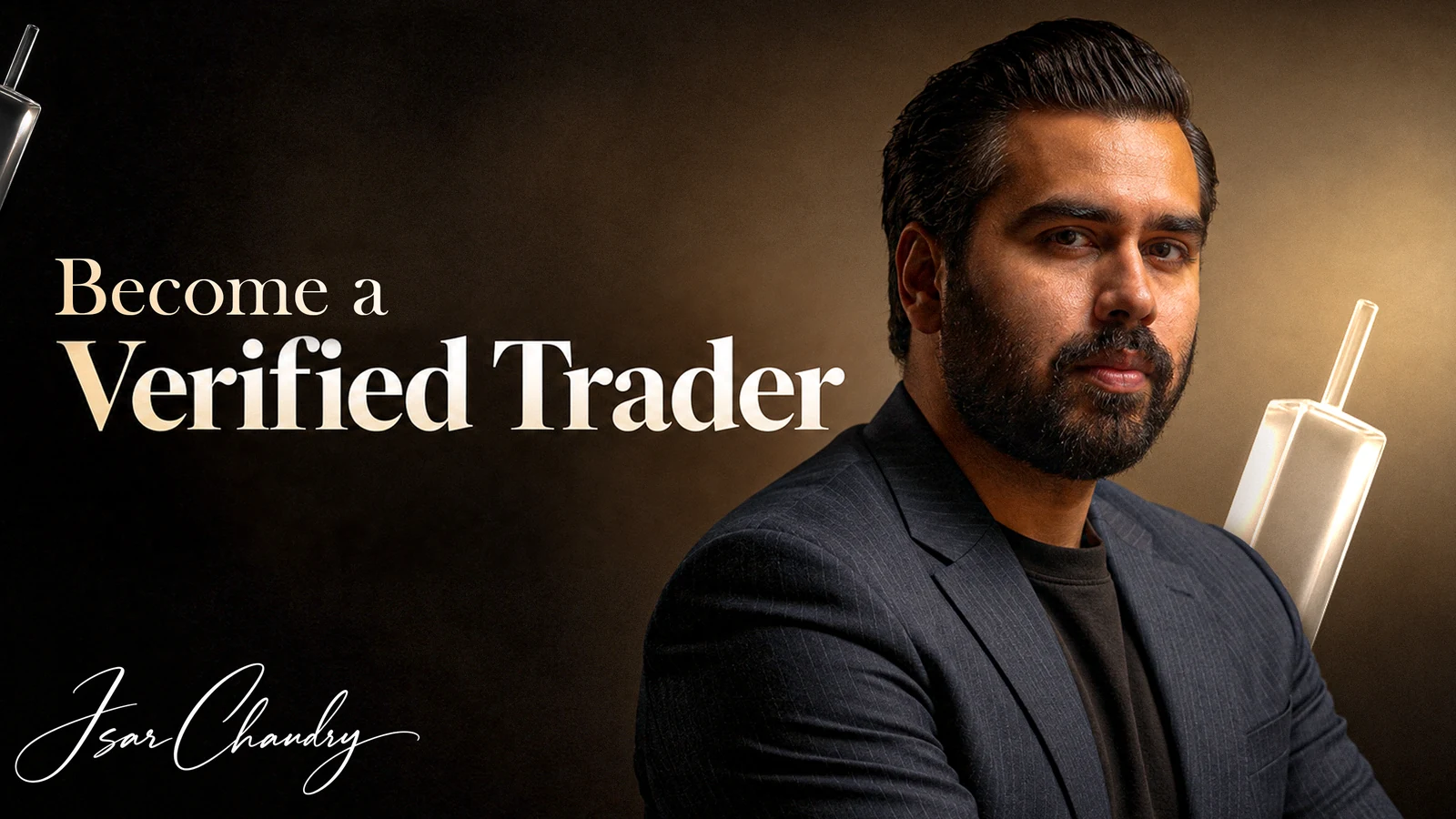
He then explains the difference between retail verification tools and an institutional audit, where an accountant independently reviews the portfolio.
He also sets realistic performance targets using 2025 benchmarks from Citadel, Bridgewater, and Two Sigma, which averaged around 2.4 percent per month. He recommends aiming for 2 to 4 percent per month rather than the 8 to 10 percent typical of prop firm targets. The masterclass closes with a full roadmap: trade a live account with a reputable brokerage for at least 1 to 2 years before auditing, keep it separate from prop firm accounts, and prioritize steady progress over big swings.
Frequently Asked Questions
Who is Isar Chaudry?
Isar Chaudry is a trader and hedge fund strategist who manages eight figures in AUM and is publicly building a hedge fund strategy consultancy. He moved from architecture into trading, had his portfolio audited by KPMG, and now teaches traders how to build an institutional-grade track record.
What markets does Isar Chaudry trade?
Isar trades mainly FX, and deploys capital into stocks and bonds when he finds strong case studies.
What is Isar Chaudry's trading strategy?
Isar trades with the trend and uses volume and heat maps to find entries. He grades setups as AAA or AA, risks around 0.25 percent per trade on FX, and actively manages open positions. He believes risk management is the most important strategy of all.
What is a verified trader?
According to Isar, a verified trader has an independently validated trading history covering account ownership, profit and loss, risk management, drawdown, and consistency, rather than screenshots shared on social media.
What monthly return should traders aim for?
Isar recommends aiming for around 2 to 4 percent per month. Large funds such as Citadel, Bridgewater, and Two Sigma averaged around 2.4 percent per month in 2025, and investors prefer steady, consistent returns over big swings.
How can a trader start working with investors?
Isar recommends earning a recognized certification such as the CFA or FRM, trading a personal account for at least a year with consistent results, and having that account audited by a firm such as KPMG before approaching investors.
What can I learn from Isar Chaudry on Chart Academy?
On Chart Academy, Isar teaches Become a Verified Trader, a free 7-lesson masterclass. It covers what a verified trader is, retail verification versus institutional auditing, choosing an audit partner, setting realistic performance targets, building a portfolio that passes an audit, and why prop firm accounts don't build a track record.
What is Chart Academy?
Chart Academy is a free, all-in-one trading education platform designed to help traders learn real, practical skills from world-class traders. It offers in-depth masterclasses taught by real traders across stocks, options, futures, forex, crypto, and trading psychology. In addition to educational content, Chart Academy includes personalized learning paths, downloadable resources, and access to exclusive tools and rewards, all in one place. There are no subscriptions, no paywalls, and no credit card required. The goal is to make high-quality trading education accessible, practical, and easy to follow for traders of all levels.
Ready to learn Trading for Free?
Chart Academy is the world's first free, all-in-one trading education platform. Get Trading Masterclass taught by world-class traders, plus guides on every market. No subscriptions, no credit card.

.svg)

More Instructors