.svg)
Okala

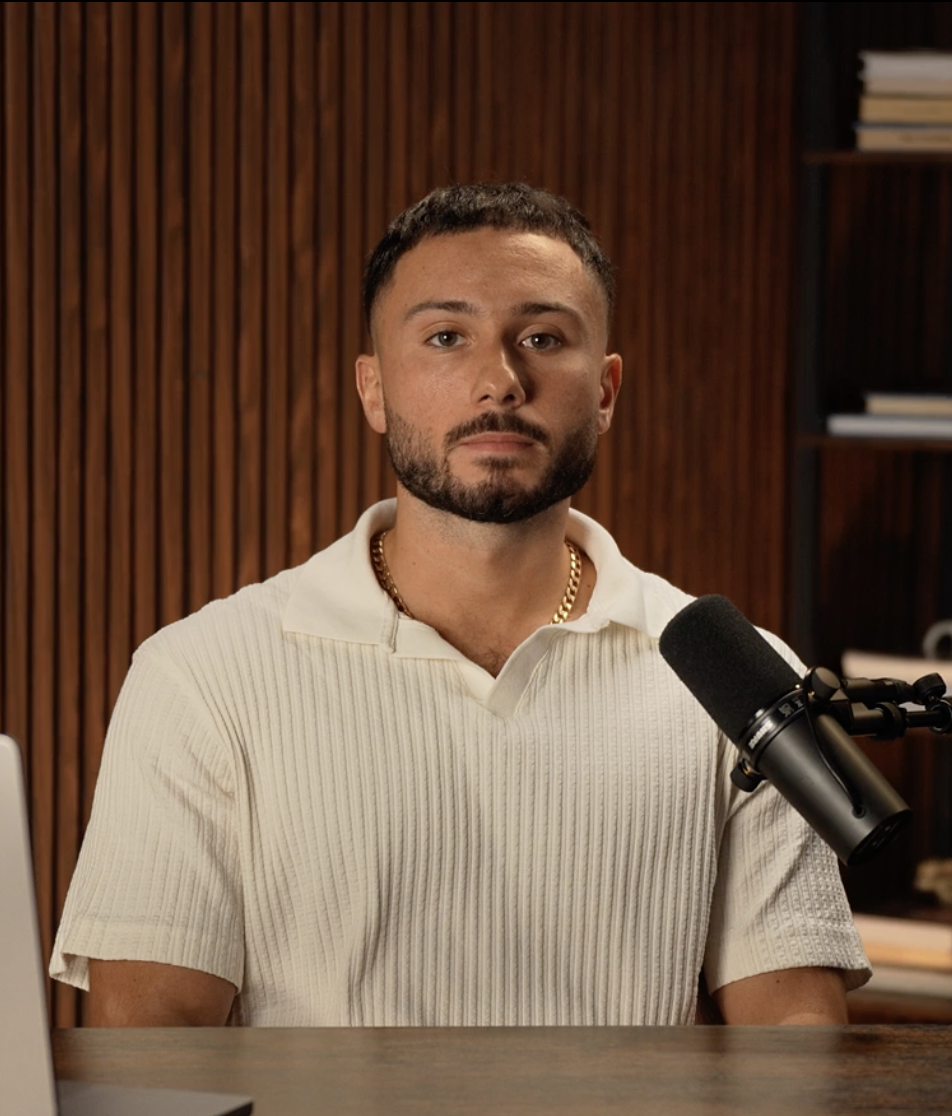
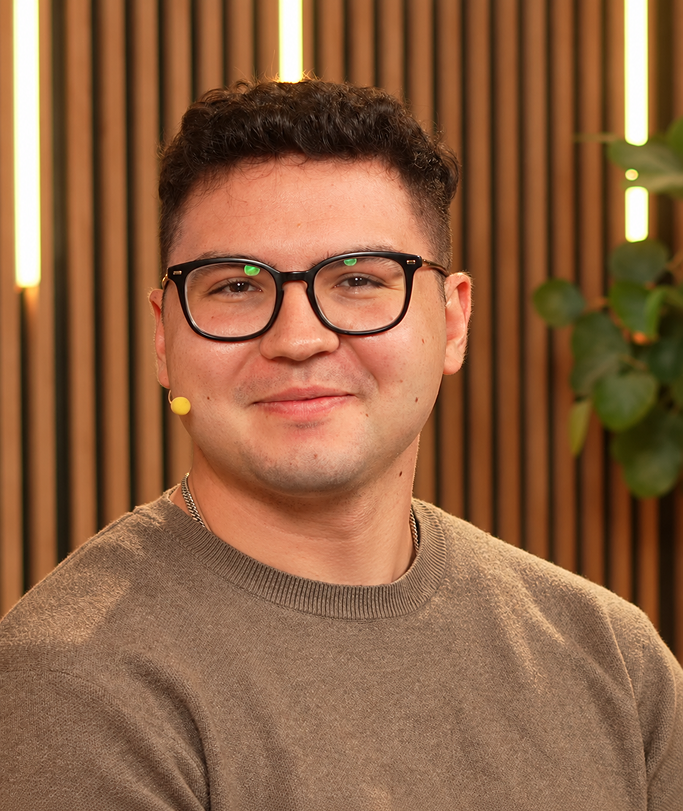
Okala is a futures scalper who has taken over $5 million in payouts from prop firms, including more than $3 million in 2025 alone, trading the NASDAQ from his phone. He went from working as an electrician to full-time trading, and now teaches the 80/20 Prop Firm Strategy on Chart Academy.


About Okala
Okala is a futures scalper who has taken over $5 million in payouts from prop firms, with more than $3 million of that in 2025 alone and around $200,000 in January 2026. What makes his story stand out is how he did it. He trades from his phone, using a simple scalping system built around fast, short-term moves on the NASDAQ.
He is clear that the real question isn't how he did it, but why. He came from a working-class family and wanted more than the path in front of him, and trading was the opportunity he found.
From Electrician to Full-Time Trader
Okala comes from a working-class family. After high school, he followed in his father's footsteps and became an electrician, working with his hands for $12.60 an hour. Everything changed on a trip to Seattle to visit friends. He watched a friend trading options make $300 in five minutes, and he asked himself what he was doing with his life.
He started trading the only way his job allowed: on his phone. His work didn't let him sit in front of a computer, so the phone was all he had. Like many beginners, he started with short-dated options that expired the same day or the same week, knowing nothing about the markets or how derivatives worked.
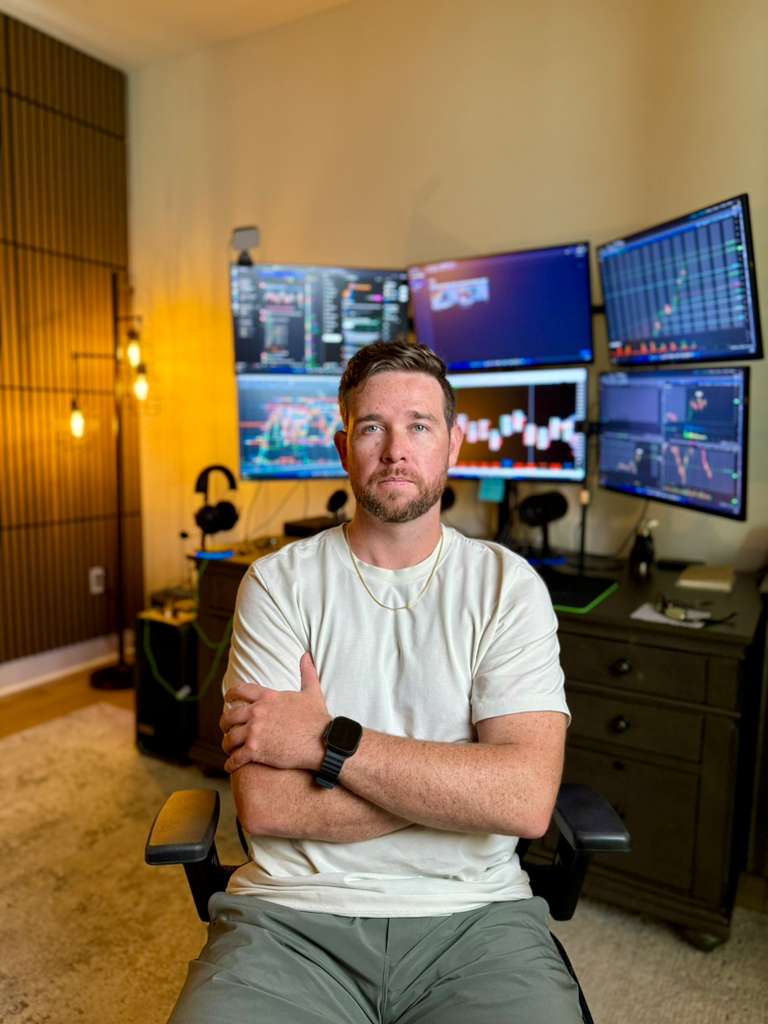
He used to think not having a big multi-screen setup was holding him back. Instead, it forced him into a specific set of restrictions that ended up shaping his edge. He couldn't watch a position for hours, so he was happy to take 10, 15, or 20 points on the NASDAQ, which can happen in seconds, and then get straight back to work.
He also credits his teenage years for his speed. He spent a lot of time playing video games and boosting other people's accounts for money, and he believes that trained him early to make quick decisions, a skill that carries over to scalping.
Building a Prop Firm Career One Account at a Time
Okala started with prop firms in 2022, trading futures only. Back then there were only a few major futures firms, no big discounts, and the process was simple: buy a challenge, pass a 7-day evaluation, then pay an activation fee.
His approach to scaling is the roadmap he gives every new trader who asks:
- Get paid out on one account first.
- Use that payout to buy two accounts.
- Then grow to four, and keep going.
That way, he never used money he needed for rent, bills, or food. The prop firms' money paid for more accounts. He started with one and is now trading around 76 accounts. Don't buy 20, 30, or 40 accounts while you're still learning, he warns, because you'll just end up blowing them and getting frustrated.
He doesn't copy trade. Each prop firm is traded separately, and his biggest problem now is too many accounts and not enough hours in the day.
Keeping the Safety Net
When his trading started working, Okala wanted to quit his job straight away. The people closest to him told him to finish what he was doing first and keep a safety net. He has a California electrical certification, and his family helped him make a plan while he was still, in his words, "hazy minded" about the risks.
By the time he did leave, he was making three times his annual income in a single month from trading. He says the people around you who see your potential don't want to hold you back. They just want you to have something to fall back on. He has also seen traders go full time with only a month's worth of expenses, then scramble when the second month didn't go well. In that fight-or-flight state, he says, you can't perform at your best.
How Okala Trades
Okala's strategy is a scalping strategy on NASDAQ futures, built around capitalizing on short-term moves. It is reversion-based and has a high win rate. He reads where participants are trapped in the market and which side is being squeezed out. As he puts it, that is all day trading really is: finding where the most participants are trapped and which side is pushing the other out.
He uses a fixed 10-point stop. If a trade isn't working right away and stops him out, the trade was wrong, even if price goes 11 points and then reverses. That small stop means he can get back in if the idea is still valid. Once a trade hits around 15 points, it is off risk, and he can ride the rest. He doesn't use a fixed risk amount per trade. He sizes up when everything lines up, and puts on less when there's less confluence.
He never backtested. His whole strategy was forward tested in live market conditions. And he doesn't believe in copying another trader's system "to the tick." Every trader has to understand their own personality first. Okala wants things to happen now, which is why fast profits and fast stops suit him. A trader who is happy to sit in positions for hours or weeks would be fighting themselves with a strategy like his.
In 2025, he also started trading more instruments. He noticed that the professional traders he looked up to all trade more than one market. So when the NASDAQ is chopping in a 30-point range, he looks at gold, silver, or even copper. Learn one instrument inside out first, he says, then write a playbook for other markets so you can make money even when one market is dead.
30 Percent Setups, 70 Percent Mental
Okala describes trading today as 30 percent setups and 70 percent mental. If his mind isn't right, because he slept badly or something else is on his mind, it doesn't matter how good the setup is if he can't execute. He checks in with himself during the day, asking whether he is seeing the market clearly, and he steps back when he isn't.
He has worked hard on what he calls winner's tilt. When he is up big and feeling on fire, a loss can make him chase his earlier high, and one loss turns into another. He feels tilt starting in his stomach and his neck. When it starts, he takes a step back, eats something, drinks some water, or closes out for the day. He doesn't have a fixed daily loss limit. Instead he has a feeling rule: when he gets hotheaded and starts questioning what the market is doing, he takes himself out of the market.
The hardest lesson for him was being okay with losing days. With a high win rate strategy, a red day is rare, and that makes it harder to accept. But he learned that positive expectancy plays out over time, and you don't need to force a red day into a green one, or turn it into a blowup.
He applies the same mindset to setbacks outside his control. Once, a firm shut down and he lost around $800,000 in profits he never got to see. He says you can be upset, but you can't let it stop you from making money on the good firms that pay consistently. If you carry that baggage around, your mental will never be at 100 percent.
Casio Days and Base Hits
The biggest thing that helped Okala succeed with prop firms was being okay with base hit days. He calls them Casio days, after the watch: nobody starts with a Rolex, everybody starts with a Casio. A new trader's day might be a $200 or $300 session, but stack those up for 10 days and you've got a payout.
Most of his own days are consistent base hits, not huge outliers. The outlier days will come, he says, but only if you stay alive long enough to get to them. He has watched many traders get blown out chasing moves and putting on huge size before the setup formed.
Okala's Prop Firm Advice
- Always take the payout. The best advice he ever got was that you can only lose in prop firms in two ways: you aren't cut out for it, or you don't take the money when you're eligible. The worst advice is the opposite: skipping a payout to keep growing the account, then blowing it a day later.
- Keep your spend low while you learn. Nobody starts as a success. Until you have a proven, consistent edge, don't blow your whole bankroll.
- Adapt to the rules. Firms change rules, sometimes retroactively. Great prop traders adapt their edge to stay inside them.
- Watch daily loss limits and consistency rules. Years ago, intraday trailing drawdowns caught traders out. Today, he says, daily loss limits combined with consistency rules can set you back weeks.
- Skip straight-to-funded accounts. If you can't pass an evaluation, he asks, what makes you think you'll do better in a straight-to-funded account? He prefers one-day-to-pass evaluations, and funded accounts with no consistency rule.
- Use a prop firm over a free simulator. A fully simulated account taught him bad habits, like adding to losers until he was green. With a prop firm, he says, you have something on the line.
- Expect to go live. He has been moved to live accounts at five firms and sees it as the reality of the industry, not a negative. His biggest payouts have come from a firm's live program.
Advice for Traders With a Day Job
Okala started exactly where most traders are: working full time with no time to watch the charts. His advice is to find time on a lunch break, a work break, or at the end of the day. The futures, forex, and crypto markets are open longer than a normal workday. If you want it, he says, you'll make it work. There's never just a take. It has to be a give and take.
Learn From Okala on Chart Academy
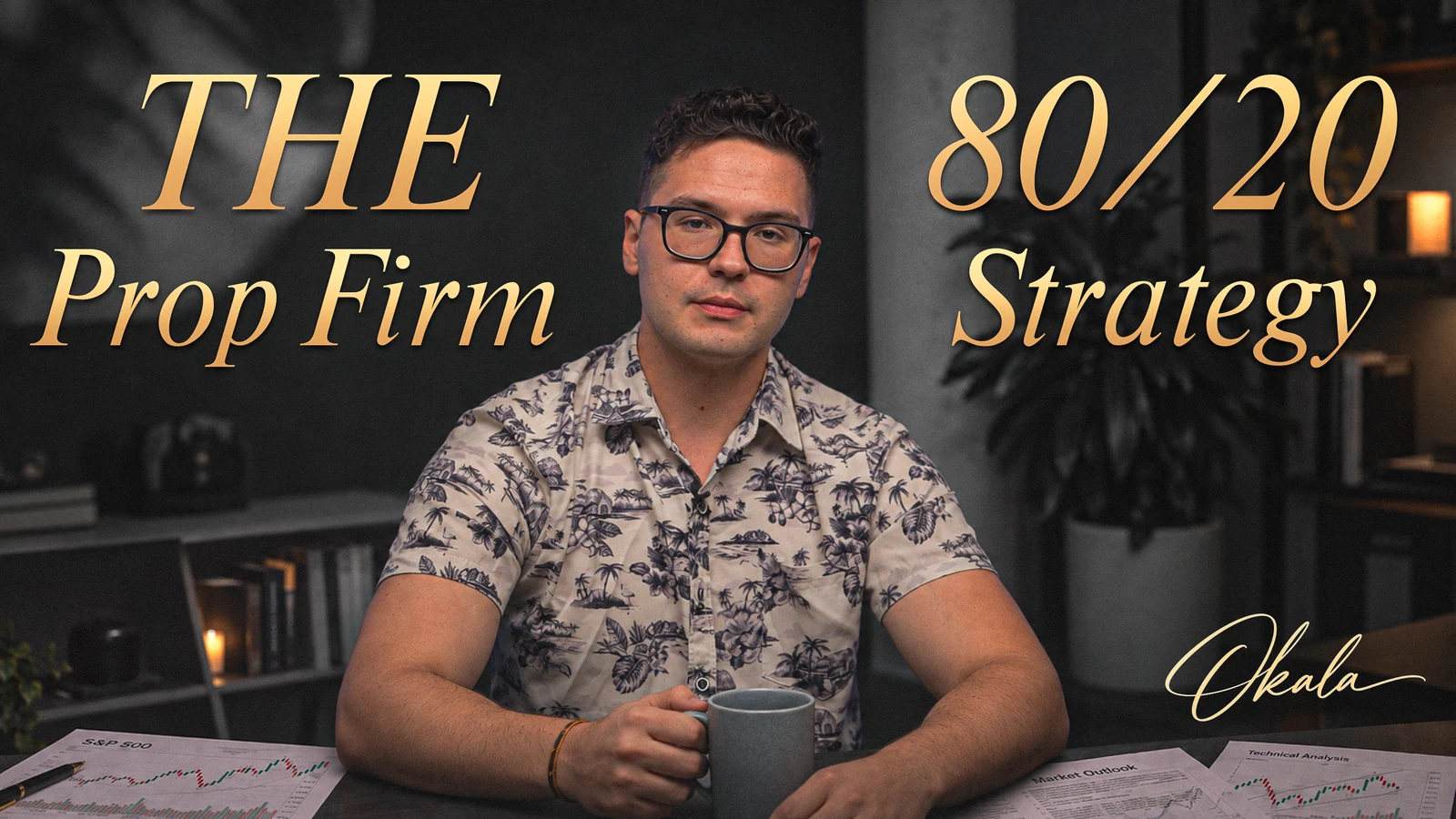
Okala recorded a free 16-lesson masterclass on Chart Academy called The 80/20 Prop Firm Strategy, where he teaches the strategy behind his prop firm payouts.
Frequently Asked Questions
Who is Okala?
Okala is a futures scalper who has taken over $5 million in payouts from prop firms, including more than $3 million in 2025 alone. He started out as an electrician earning $12.60 an hour, trades the NASDAQ from his phone, and now teaches the 80/20 Prop Firm Strategy on Chart Academy.
What markets does Okala trade?
Okala mainly trades NASDAQ futures. In 2025 he also began trading other futures markets, including gold, silver, and copper, so he can still find opportunities when one market isn't moving.
What is Okala's trading strategy?
Okala trades a reversion-based scalping strategy on NASDAQ futures with a high win rate. He uses a fixed 10-point stop, takes the trade off risk once it reaches around 15 points, and focuses on finding where participants are trapped in the market.
How did Okala scale his prop firm accounts?
He got paid out on one account first, then used that payout to buy two accounts, then four, and kept growing from there. He started with one account and now trades around 76, without using money he needed for bills.
What is Okala's best prop firm advice?
Always take the payout. According to Okala, you can only lose in prop firms in two ways: you aren't cut out for trading, or you don't take the money when you're eligible.
What can I learn from Okala on Chart Academy?
On Chart Academy, Okala teaches The 80/20 Prop Firm Strategy, a free 16-lesson masterclass on the strategy behind his prop firm payouts.
What is Chart Academy?
Chart Academy is a free, all-in-one trading education platform designed to help traders learn real, practical skills from world-class traders. It offers in-depth masterclasses taught by real traders across stocks, options, futures, forex, crypto, and trading psychology. In addition to educational content, Chart Academy includes personalized learning paths, downloadable resources, and access to exclusive tools and rewards, all in one place. There are no subscriptions, no paywalls, and no credit card required. The goal is to make high-quality trading education accessible, practical, and easy to follow for traders of all levels.
Ready to learn Trading for Free?
Chart Academy is the world's first free, all-in-one trading education platform. Get Trading Masterclass taught by world-class traders, plus guides on every market. No subscriptions, no credit card.

.svg)

More Instructors