Trading Foundation
Options Trading Basics: Terminology Every Beginner Must Master
Every options term explained simply: premiums, strikes, in and out of the money, open interest, spreads, and the order terms your broker uses.
Read more →


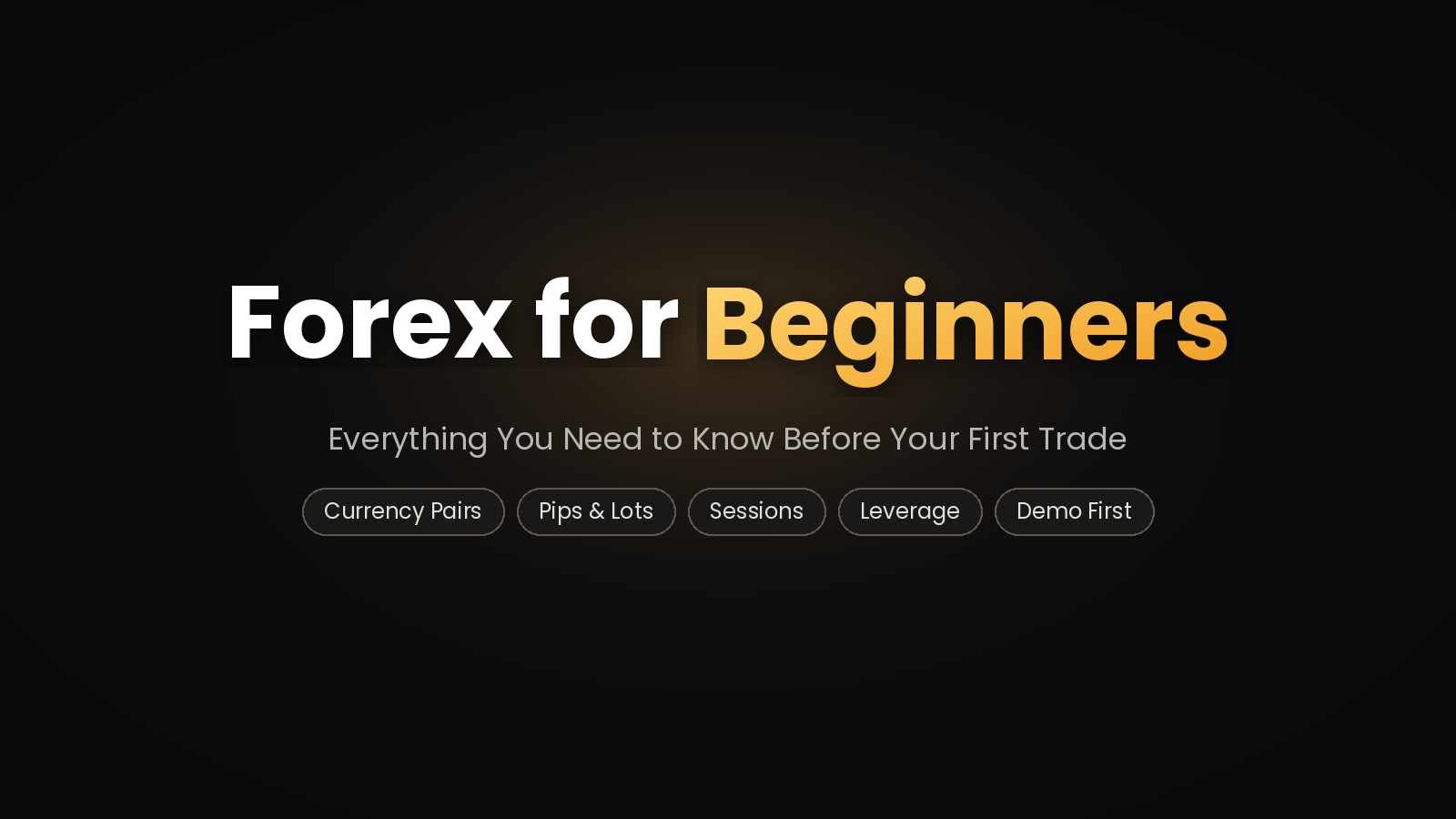
Forex has a small set of core concepts, and this guide teaches them in the right order: currency pairs, pips and lots, market sessions, and leverage. Learn what to understand, practice, and avoid before your first trade puts real money at risk.

Forex trading can look intimidating from the outside. Prices are quoted to five decimal places, charts move around the clock, and people throw around terms like pips, lots, leverage, and spreads as if everyone was born knowing them. Most beginners respond by watching videos for weeks and finishing more confused than they started.
The good news is that forex has a small set of core concepts, and once you understand them in the right order, the rest of the market starts to make sense.
At Chart Academy, we give traders free access to education led by professional traders, including full forex masterclasses. This blog covers what we would want to understand before placing a first forex trade, in the order we would want to learn it.
If you are starting from zero, break forex down into a few clear steps rather than trying to absorb everything at once:
Each of these is covered below.
Forex, short for foreign exchange, is the market where one currency is exchanged for another. If you have ever changed money before a holiday, you have already made a forex transaction. Trading it simply means making that exchange on purpose, because you expect one currency to strengthen against another.
It is the largest financial market in the world. According to the Bank for International Settlements' 2025 survey, around $9.6 trillion moves through the currency market every day, and the US dollar is on one side of roughly 89 percent of all trades.
Currencies are always traded in pairs. In EUR/USD, the euro is the base currency and the US dollar is the quote currency, so a price of 1.0850 means one euro costs 1.0850 dollars. If you expect the euro to strengthen, you buy the pair. If you expect it to weaken, you sell the pair. Profiting from falling prices is as normal in forex as profiting from rising ones, which is one way it differs from how most people first experience the stock market.
Not all pairs behave the same way, and choosing what to study first matters.
Major pairs all include the US dollar: EUR/USD, USD/JPY, GBP/USD, AUD/USD, NZD/USD, USD/CAD, and USD/CHF. They carry the most volume, which usually means the tightest spreads and the lowest trading costs.
Cross pairs combine major currencies without the dollar, such as EUR/GBP or GBP/JPY. They are still liquid, with usually slightly wider spreads.
Exotic pairs match a major currency with the currency of a smaller economy, like the Turkish lira or South African rand. They can move sharply on political news and typically cost much more to trade. Most beginners are better off leaving exotics alone.
Many beginners start with one major pair, often EUR/USD, and study it deeply before adding others. One pair watched every day will teach you more than five pairs watched occasionally.
A pip is the unit forex prices move in. For most pairs, it is the fourth decimal place, so a move from 1.0850 to 1.0851 is one pip.
What a pip is worth in money depends on your position size, which comes in standard units called lots. On many US dollar pairs, a standard lot (100,000 units) makes each pip worth about $10, a mini lot (10,000 units) about $1, and a micro lot (1,000 units) about $0.10. Exact values vary by pair and broker, so check what your platform shows before trading.
Micro lots are the reason forex is one of the more accessible markets for small accounts: position sizes can scale down to fit the money you actually have.
Your main trading cost is usually the spread, the small gap between the buying and selling price. Liquid major pairs tend to have the tightest spreads, which is another reason beginners usually start there.
The forex market runs 24 hours a day, five days a week, because trading follows the sun from Asia to London to New York. But open does not mean equally active.
The London session usually carries the most volume, New York is second, and the window where both are open, roughly 8 a.m. to noon Eastern, is typically the most active period of the day. The Asian session is generally quieter, with the main exception of pairs involving the Japanese yen.
One habit is worth building before your first trade: check an economic calendar. Interest-rate decisions, inflation reports, and employment data can move currency prices within seconds of release, and you do not want to learn that with an open position.
Three forces explain most currency movement.
Interest rates. When a central bank raises rates, holding that currency pays more, and global demand for it tends to rise. This is why forex traders follow the Federal Reserve and other major central banks closely.
Economic data. Strong jobs, growth, and inflation figures signal a healthy economy, which tends to attract money into its currency. Weak data does the opposite.
Market mood. In times of fear, money often flows toward currencies seen as safer, such as the US dollar, Swiss franc, and Japanese yen. In confident markets, growth-linked currencies like the Australian dollar tend to do better.
None of this is secret information. Learning how prices react to it is a skill you build by watching, not a code you crack.
Leverage lets you control a larger position than your account balance would otherwise allow. In the US, regulated forex brokers can offer up to 50:1 on major pairs, which means a $500 account could technically control $25,000 of currency.
Offered is not the same as recommended. Leverage magnifies losses exactly as efficiently as it magnifies gains, and it is the most common reason beginner forex accounts fail. You can trade forex without using meaningful leverage by keeping your position sizes small relative to your account. Until you have a tested approach and a track record on a demo account, that is the safer way to learn.
The US regulator's customer advisory on forex trading is short and worth reading before you fund any account. You can also verify that a US forex broker is registered through the NFA.
Money needed for rent, bills, debt payments, or emergencies is not trading capital. Forex trading carries a substantial risk of loss, and the account you fund should be money you could lose entirely without harming your life.
The practical floor is lower than many people expect. Because micro lots make each pip worth about ten cents, a few hundred dollars can be enough to take real, properly sized practice trades. Treat an account that size as a learning account rather than an income source. We cover the wider question in how much money you need to start trading.
Every established forex broker offers a free demo account with live prices and simulated money. Use it to practice the mechanics: placing orders, setting a stop loss, adjusting position size, and following the rules of the approach you are studying.
Demo trading has limits. It cannot reproduce the emotions of real gains and losses, and simulated fills may not match live conditions. Treat it as training for execution, not proof of future results. A common approach is to stay on demo until you can follow one written strategy consistently across at least 20 trades, then start live with the smallest size available.
Once the basics above make sense, build the rest of your knowledge in a deliberate order. First, understand risk and position sizing, meaning how much money a trade puts at stake and how to keep that amount small and consistent. Then study one trading approach properly: what gets a trader into a position, what gets them out, and, just as important, what keeps them out of the market entirely. If you cannot explain your reasons for entering, exiting, or staying out, you are not ready to use that approach with real money.
A structured forex trading course helps you work through those skills in sequence instead of collecting random setups from videos.
It can become profitable, but usually not quickly, and honesty about this matters more in forex than anywhere else because leverage makes early mistakes expensive. Most beginners lose money at first. The ones who eventually do well tend to share the same pattern: they traded small, journaled their trades, focused on one pair and one approach, and treated their first year as skill-building rather than income.
Be cautious with anyone promising specific returns. In a market this large, the sellers of shortcuts make their money from the shortcut, not the trading.
Start journaling before real money is involved. For every trade, write down why you entered, how much was at risk, where you planned to exit, and whether you followed your own rules. Note how you felt, especially when nerves or excitement changed a decision.
After a month or two, your journal will show you things you cannot see any other way: the session you trade best, the pair that keeps costing you money, the rule you break most often. That feedback loop is what turns practice into progress.
You now know what forex trading involves: pairs, pips, sessions, leverage, and the order in which to learn them. The next step is learning from people who have traded currencies professionally.
At Chart Academy, our forex masterclasses are taught by Charlie Burton, a trader with 28 years in the currency markets, and Ali Crooks. They walk through how they approach the market, how they manage risk, and the situations that keep them on the sidelines. Every masterclass is free, with no subscriptions, paywalls, or credit card required, so you can practice on a demo account alongside the lessons and build your skills before you put real money at risk.
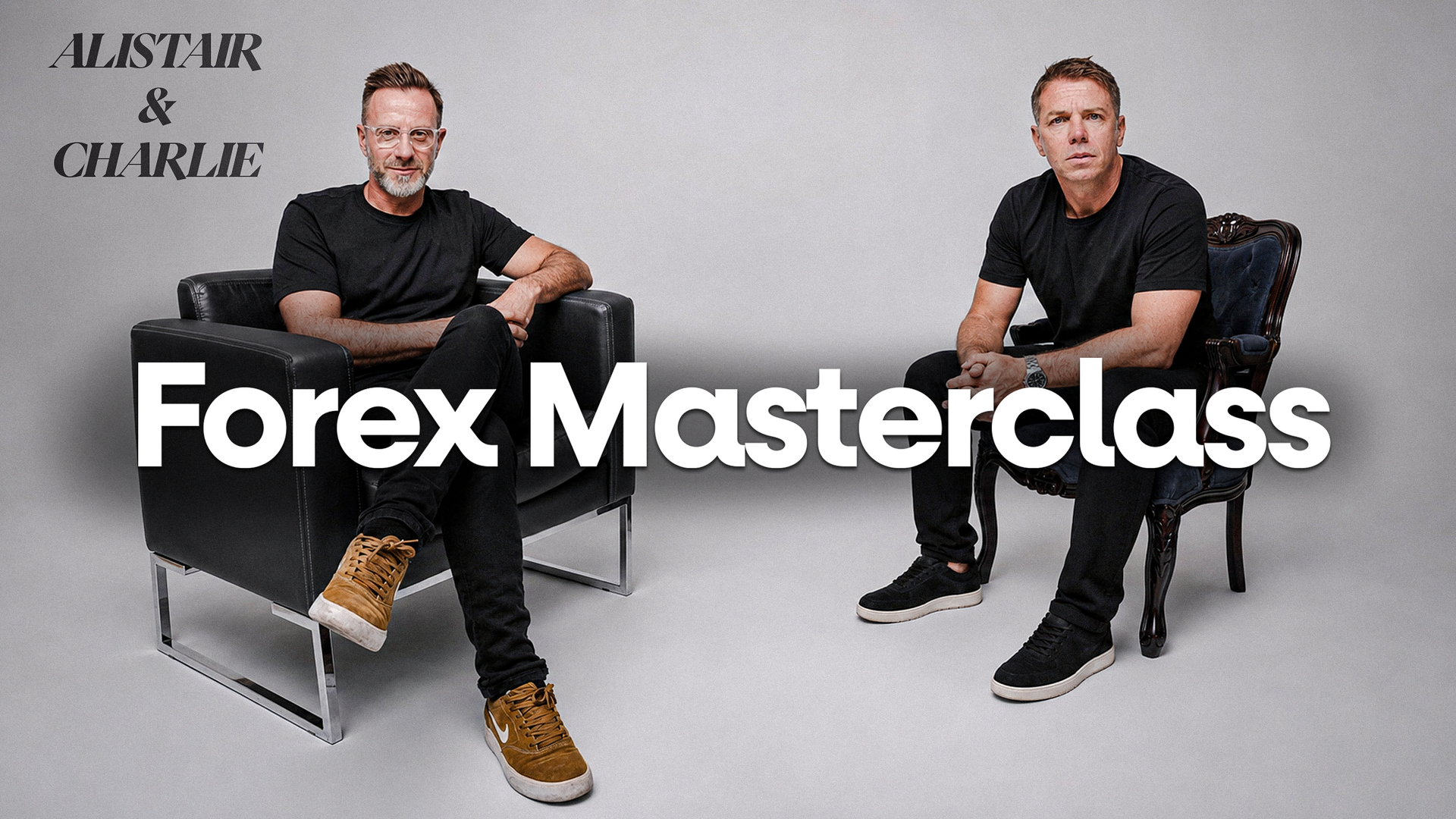
Chart Academy provides educational content and does not provide financial, investment, or trading advice. Trading involves a substantial risk of loss and is not suitable for everyone. Past performance is not indicative of future results.
Start with education, not an account. Chart Academy's free forex masterclasses show you how professional traders approach the market, and a free demo account gives you a place to practice what you learn. Move to a small live account only after you can follow one written approach consistently.
There is no single right amount. Because micro lots make each pip worth about ten cents, a few hundred dollars can be enough for a learning account. What matters more is that the money is separate from anything you need for essential expenses or emergencies.
Many beginners start with one major pair, often EUR/USD, because it has the highest volume, typically the tightest spreads, and the most learning material available. Studying one pair deeply teaches you more than sampling many.
The market is generally most active when the London and New York sessions overlap, roughly 8 a.m. to noon Eastern time. If you plan to hold trades for days rather than hours, the exact hour you enter matters much less.
It can be for traders who build skill first, but most beginners lose money early, and leverage is usually the reason. Treat your first year as training: small positions, one pair, one approach, and a journal. Be skeptical of anyone promising specific returns.
No. Good forex education can be free. What matters is the experience behind the teaching and whether it gives you a clear way to understand decisions and risk. Chart Academy's forex masterclasses are taught by professional currency traders at no cost.
Chart Academy is the world's first free, all-in-one trading education platform. Get Trading Masterclass taught by world-class traders, plus guides on every market. No subscriptions, no credit card.

.svg)