Trading Foundation
Options Trading Basics: Terminology Every Beginner Must Master
Every options term explained simply: premiums, strikes, in and out of the money, open interest, spreads, and the order terms your broker uses.
Read more →


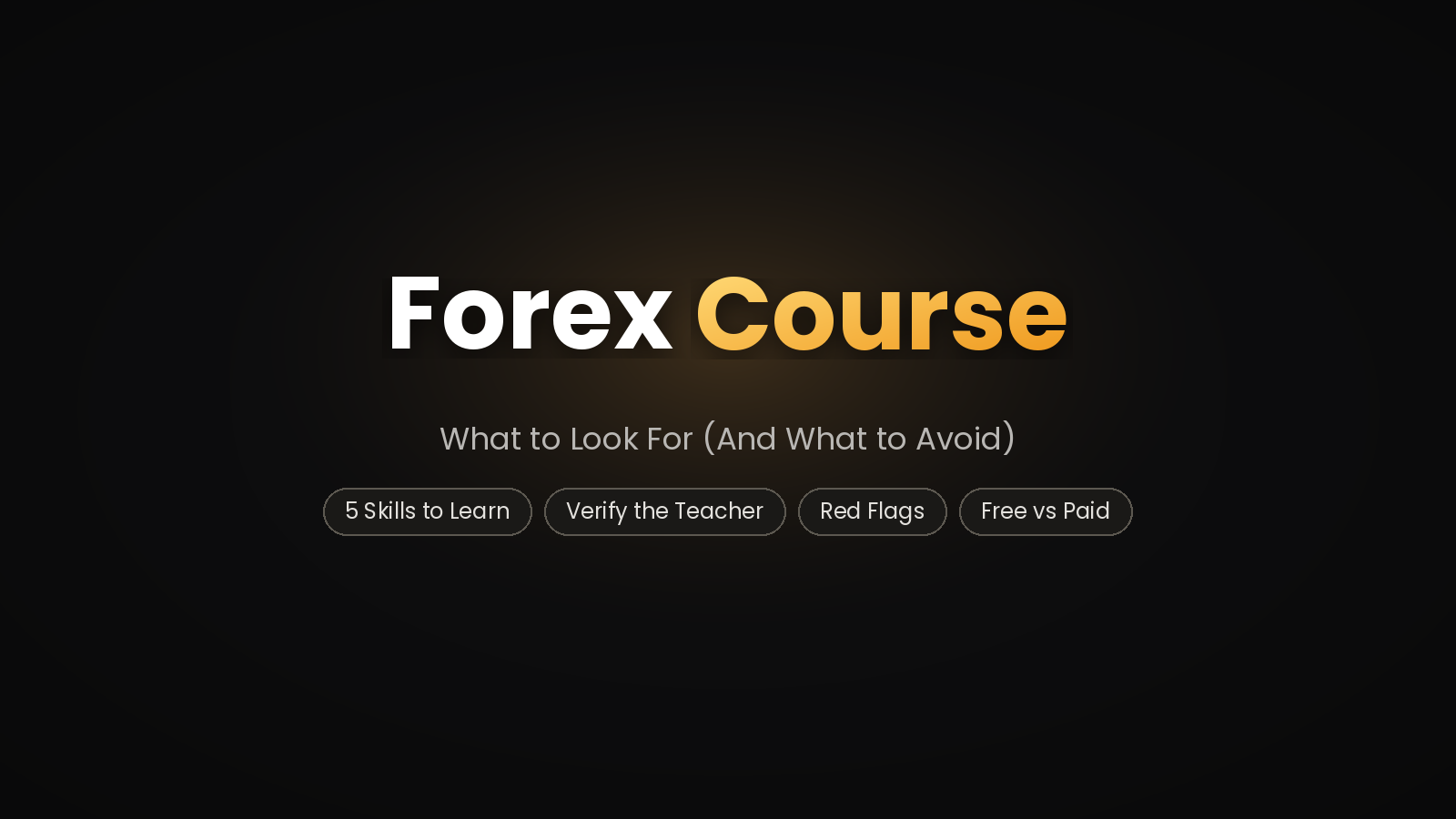
Forex education ranges from real traders teaching real decisions to lifestyle marketing dressed up as a course. This guide gives you the checklist: five things good education must cover, how to verify a teacher, and the red flags that mean walk away.

Search for a forex trading course and you'll find two very different worlds. In one, experienced traders teach how they actually make decisions. In the other, someone who makes their money selling courses rents a sports car for the weekend and films it.
The second world is bigger than the first, and it costs beginners real money twice: once for the course, and again in the account losses that follow bad teaching.
At Chart Academy, we give traders free access to education led by professional traders, so we have strong opinions about what trading education should look like. This blog lays out how we would evaluate any forex course, including our own: what it should teach, who should be teaching it, and the warning signs that mean walk away.
Strip away the marketing and good forex education covers five things, in roughly this order.
1. How the market actually works. Currency pairs, pips, lots, spreads, and sessions. If a course jumps straight to strategies without building this base, everything after it is memorization, not understanding.
2. Risk and position sizing. How much money a trade puts at stake, how position size is calculated from a stop level, and why keeping risk small and consistent decides whether you survive your learning period. This is the least glamorous module in any course and the most valuable.
3. One clear approach, taught completely. What gets the trader in, what gets them out, and what keeps them out of the market entirely. A pile of disconnected setups is not an approach. If you cannot explain the reasons to enter, exit, or stay out, the course hasn't taught you a method, it has shown you screenshots.
4. The trader's actual decision process. Not just "here is the pattern" but how the teacher thinks when the pattern is forming, when it fails, and when they choose to do nothing. Doing nothing is most of trading, and courses that never mention it are describing a fantasy version of the job.
5. A practice plan. How to apply the material on a demo account, what to journal, and how to judge your own progress by decision quality rather than early profits.
If a course you're considering covers those five, it's structurally sound. Then the question becomes who's teaching it.
The forex education space has no entry requirements, so you have to do the checking yourself.
Look for verifiable trading history: how long they've traded, where, and whether anything about their experience can be confirmed outside their own marketing. Be careful with screenshots of profits, which are easy to fabricate and impossible to verify. A teacher whose income comes mostly from course sales rather than trading isn't automatically bad, but it changes their incentives, and you should know which one you're dealing with.
If a course is connected to a broker or investment offering, you can check that the firm is actually registered. In the US, the NFA lets you verify any forex firm's registration status, and the CFTC's advisory on forex trading is worth reading before you pay anyone anything.
Some warning signs are reliable enough that any one of them should end the conversation.
Promised returns. "Make $500 a day," "double your account monthly," or any specific income claim. No honest trader promises returns, because no honest trader can. Trading involves a substantial risk of loss, and profits are never guaranteed for anyone.
Lifestyle marketing. Cars, watches, and beach laptops in place of teaching samples. Courses that lead with wealth are selling a feeling, not a skill.
Signals dressed up as education. Some services sell trade alerts to copy, calling it a course. Copying signals teaches you nothing and leaves you dependent on the seller forever. Education makes you independent; signals do the opposite.
Pressure tactics. Countdown timers, "only 3 spots left," and aggressive upsells into mentorships costing thousands. Real education doesn't expire at midnight.
The secret strategy. Claims of a hidden method "banks don't want you to know." There are no secrets in a market this large, only skills, and skills are learned in the open.
Some are. There are experienced traders who sell genuinely good structured education, and the price of a course tells you nothing either way: some of the most expensive programs online are the worst offenders on the list above, and some excellent education costs nothing.
The honest rule is this: price is not evidence of quality, and neither is a big following. The only things that matter are whether the teacher's experience is real and whether the curriculum covers the five areas above. Judge every course, free or paid, by the same checklist.
Free trading education usually comes from one of two places, and it's worth knowing which one you're looking at.
A lot of free content is published by brokers. Some of it is well made, but its job is to open trading accounts, which is why broker education tends to rush you toward funding an account and rarely lingers on risk.
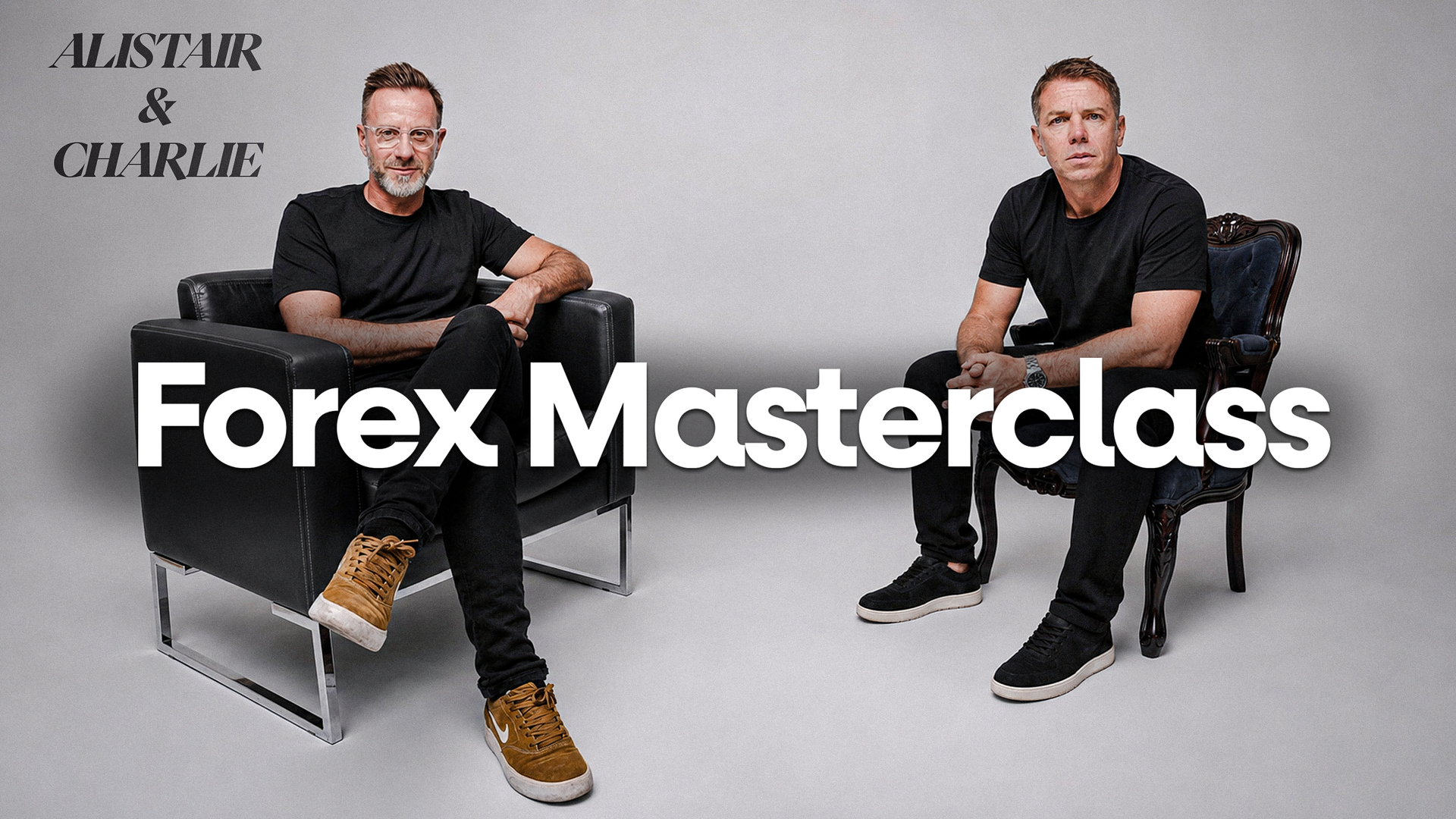
The other kind is free education as the product itself, built on the model that good teaching should be accessible before someone risks money. That's the model we built Chart Academy on: our free forex trading course is made of complete masterclasses taught by Charlie Burton, a trader with 28 years in the currency markets, and Ali Crooks. They teach how they approach the market, how they manage risk, and when they stay out, with no subscriptions, no paywalls, and no credit card required. You can judge it against every test in this article, which is exactly how it should be.
Five questions filter out most bad courses quickly. Who is teaching, and can any part of their experience be verified? Does the curriculum teach risk and position sizing before strategies? Does it teach one complete approach, including when to stay out? What does it cost in total, including the upsells that appear after you join? And does any part of it promise returns, because if the answer is yes, you already have your answer.
Education only converts into skill through practice. Watch the lessons alongside a free demo account and apply each concept as you learn it. Journal your practice trades: why you entered, what was at risk, whether you followed the approach being taught. Resist collecting courses. One good course studied thoroughly, practiced on demo, and reviewed in a journal will do more than five courses skimmed. If you're starting from zero, our forex trading for beginners guide covers the foundations the lessons will build on, and forex trading hours explains when to schedule your practice sessions.
You now have a working checklist: five things a course must teach, the checks to run on any teacher, and the red flags that end the conversation. Run every course through it, including ours.
Chart Academy gives you free access to complete forex masterclasses taught by professional traders, with no subscriptions, paywalls, or credit card required.
Chart Academy provides educational content and does not provide financial, investment, or trading advice. Trading involves a substantial risk of loss and is not suitable for everyone. Past performance is not indicative of future results.
A good one is, whether free or paid, because structured teaching in the right order beats months of random videos. Judge any course by its teacher's verifiable experience and whether it covers market mechanics, risk, and one complete approach, not by its price or its marketing.
Anywhere from nothing to several thousand dollars, and price does not predict quality. Chart Academy's forex masterclasses are completely free, while some expensive programs are built mainly around upsells. Evaluate the curriculum and the teacher, not the price tag.
Yes. Chart Academy's free forex trading course includes complete masterclasses from professional currency traders, and every broker offers a free demo account to practice on. The full learning path, education plus practice, can genuinely cost nothing.
The reliable warning signs are promised returns, lifestyle marketing, trade signals sold as education, countdown-timer pressure tactics, and claims of secret strategies. Any one of these is reason enough to walk away, regardless of how professional the website looks.
The lessons might take days or weeks, but the skill takes much longer, because it's built through practice, not watching. Plan to spend far more time applying the material on a demo account than consuming it, and expect months of practice before the approach feels natural.
No course can, and any course that suggests otherwise is misleading you. Education improves your decisions and your risk control. The results still depend on practice, discipline, and market conditions, and trading always carries a substantial risk of loss.
Chart Academy is the world's first free, all-in-one trading education platform. Get Trading Masterclass taught by world-class traders, plus guides on every market. No subscriptions, no credit card.

.svg)