Trading Foundation
Options Trading Basics: Terminology Every Beginner Must Master
Every options term explained simply: premiums, strikes, in and out of the money, open interest, spreads, and the order terms your broker uses.
Read more →


Options education is full of income promises and signal rooms dressed up as teaching. This guide gives you three tests to judge any options trading course, what a real curriculum covers, and why good options education doesn't have to cost anything.

Options education has a fluff problem. For every course that teaches how a contract is actually priced, there are ten selling the dream of weekly income, "safe" premium collection, or a signals room where you copy someone else's trades for $99 a month.
The cost of choosing badly is doubled in options. You lose the course fee, and then you lose real money applying half-taught concepts to instruments that can go to zero in a week.
At Chart Academy, we give traders free access to education led by professional traders like Usman Ashraf, which gives us a clear stake in this topic and a simple position: judge every options course, including ours, by the same tests. Here they are.
Three tests separate real education from fluff. Run any options trading course through them before paying or enrolling.
Who is teaching, and does anything about their trading exist outside their own marketing? Profit screenshots prove nothing, since they're trivial to fabricate. What you're looking for is verifiable experience and a teacher who shows their reasoning, not just their results. A seller whose income is clearly the course itself has different incentives than a trader who teaches.
Does it teach the machinery before the money? Real options education spends serious time on unglamorous ground: how contracts are priced, what the Greeks actually measure, why time decay exists, what implied volatility does to premiums around events, and how position sizing works when total loss is a routine outcome. A course that opens with income strategies and never explains why an option loses value on a flat day is teaching outcomes before understanding, and the gap shows up later, in the account.
The fastest test of the three. Any course promising returns, "consistent weekly income," a win-rate, or financial freedom on a timeline has already told you what it is. Options can produce steady-looking gains right up until one position gives them all back, and honest educators say so. Trading involves substantial risk of loss, and a course that hides that sentence is hiding it for a reason.
If you stripped the marketing off a genuinely good options trading course, the table of contents would look something like this: contracts and pricing first, meaning calls, puts, strikes, premiums, and what one contract controlling 100 shares does to your math, the same ground we walk through with worked numbers in how to trade options. Then the option chain, how to read it and how liquidity decides which strikes are even tradeable. Then the forces that move premiums, time decay and implied volatility, including what happens to option prices around earnings. Then the two sides of the market, why buying caps your risk at the premium and why selling opens it up, and what broker approval levels have to do with it. And only then strategy, taught as decision-making with defined risk, not as a pile of setups.
They deserve their own paragraph because they're the fastest-growing corner of options "education," and most aren't education at all.
A service that sends trades to copy teaches you nothing and makes you dependent by design: the moment you stop paying, you stop having a strategy. Worse, copied options trades carry timing risk the sender never mentions, since a premium can move sharply between their entry and yours. A room can be worth joining for community after you can evaluate trades yourself. As a substitute for learning, it means paying for access to someone else's decisions instead of building your own.
Price and quality are strangers in this market. Some expensive programs fail all three tests above, and some of the best options education available is free.
What matters is whether the teacher is real and the curriculum is complete. Chart Academy's free options trading course is built to that standard, and it goes further than basics. The core of it is the Options Masterclass, taught by Usman Ashraf, a professional options trader, across six lessons that take you from zero prior knowledge to a working framework: what calls and puts actually are, how to read an options chain and judge liquidity, how the Greeks and implied volatility move your premiums, why same-day expirations demand different sizing, and how to manage risk, ending with a step-by-step progression plan from paper trading to a funded account.
And once the foundation is in place, you don't stop at basics. Chart Academy also has strategy masterclasses that apply to options, including The Break and Retest Strategy taught by Vincent Desiano, along with other classes from professional traders that show complete trading systems in action. That's the full path most paid courses promise and rarely deliver: mechanics first, then real strategies, all free, with no subscription, no upsell behind lesson one, and no credit card.
If you want to learn options trading for free, join Chart Academy. The lessons are taught by Usman Ashraf, a professional options trader, with no subscriptions, paywalls, or credit card required.
Apply each lesson on a paper trading account as you go, and if you're still deciding whether options are the right market for you, start with options trading for beginners.
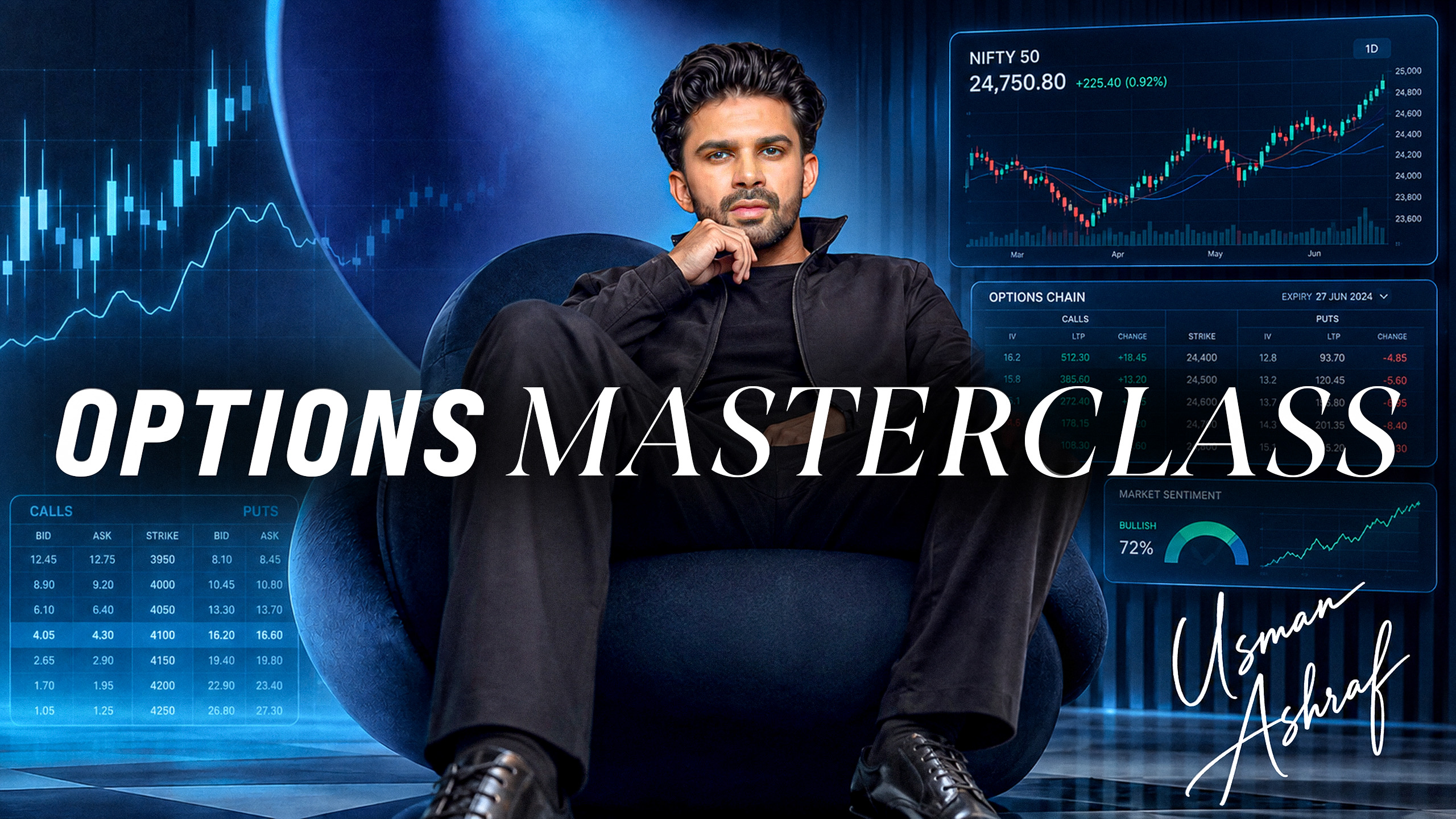
Chart Academy provides educational content and does not provide financial, investment, or trading advice. Trading involves a substantial risk of loss and is not suitable for everyone. Past performance is not indicative of future results.
A course that passes three tests is: a teacher with verifiable experience, a curriculum that covers pricing, Greeks, and risk before strategies, and zero promised returns. A course that fails any of the three costs you twice, once at checkout and again in the market.
Anywhere from free to thousands, and the price predicts nothing. Chart Academy's Options Masterclass is free and covers the full foundation; some four-figure programs are mostly upsells and recycled setups. Judge the curriculum and the teacher, never the price tag.
Yes. Chart Academy's options education is completely free and covers the full path: the Options Masterclass, taught by professional options trader Usman Ashraf, takes you from contract basics through the Greeks, implied volatility, and risk management across six lessons, and strategy masterclasses like The Break and Retest Strategy by Vincent Desiano continue from there. No subscriptions, paywalls, or credit card required.
No. Brokers grant approval levels based on your application, not course certificates. What a good course changes is what happens after approval, because the market grades your understanding of time decay and sizing whether or not anyone taught you.
Contracts and pricing before anything else: calls, puts, strikes, premiums, and why options lose value as time passes. Strategy belongs at the end of a curriculum, once the foundations are in place. A course that reverses that order usually prioritizes selling over teaching.
No. Copying trades builds dependence instead of skill, and option premiums can move sharply between the sender's entry and yours. Learn to evaluate trades yourself first; after that, communities can add value without substituting for judgment.
Chart Academy is the world's first free, all-in-one trading education platform. Get Trading Masterclass taught by world-class traders, plus guides on every market. No subscriptions, no credit card.

.svg)